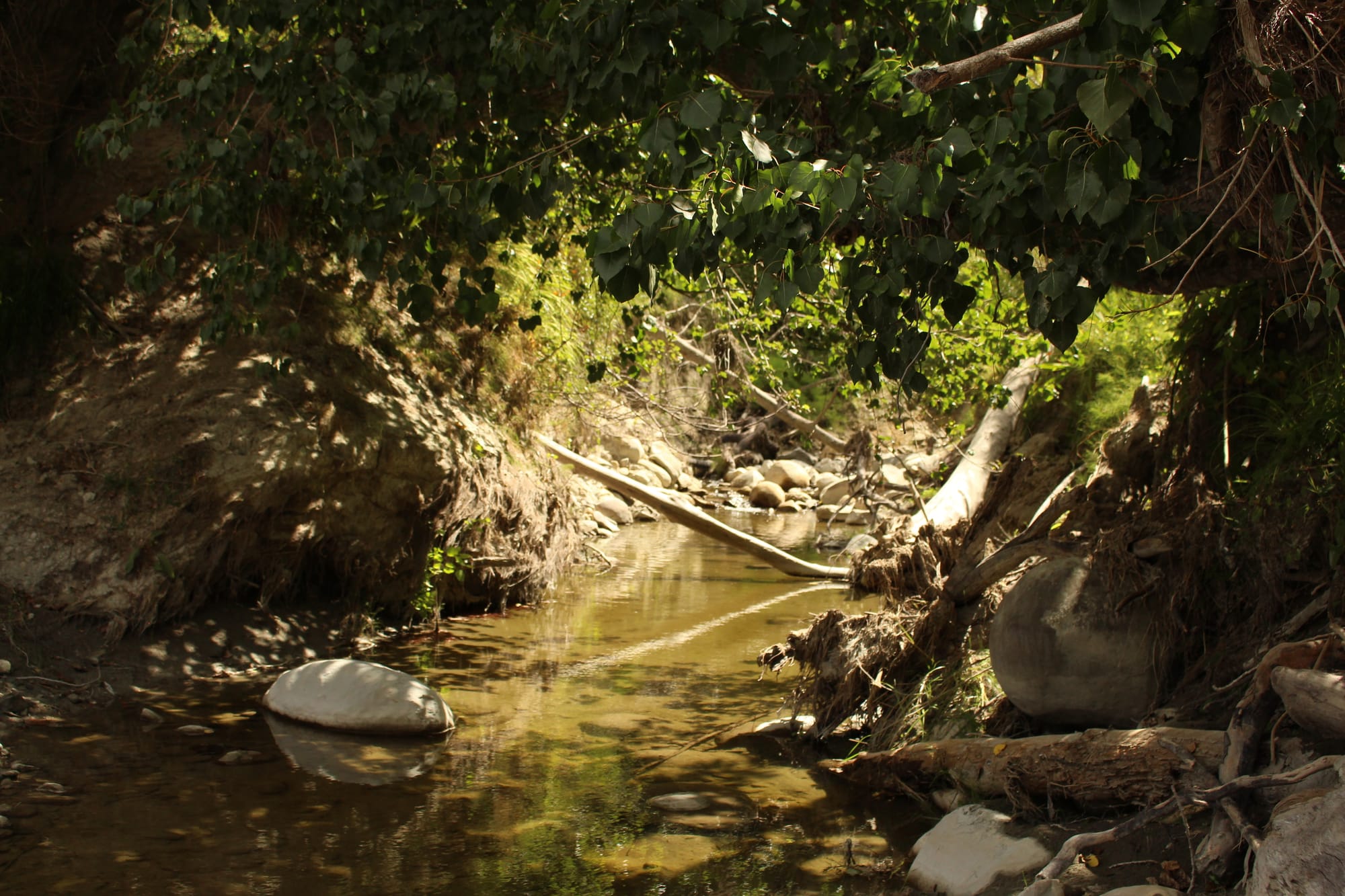
He openga kia wātea te tuanga
Creating space for this adze (blog).

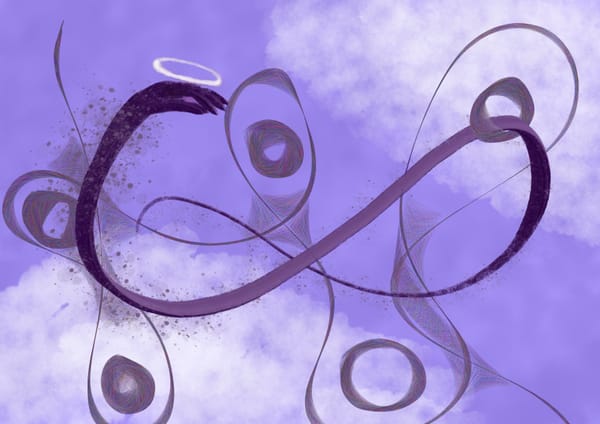
He openga kia wātea te tuanga mō te toki nei, mā Te Āwhiorangi
An outcome, creating space for this adze, for Te Āwhiorangi
Nā Hori Paamu Whakarake Tinirau, Aotea waka
This comes from a ruruku (sequence of incantations) designed to re-tell the makings of the Aotea canoe from Hawaiki-rangiātea (original homeland) to Aotearoa. This particular translation derives from my great-great grandfather, Hori Paamu Whakarake Tinirau. This small excerpt of the ruruku tells of the legendary toki (adze) called Te Āwhiorangi that was used in the birth story of our world. This toki was wielded by Tāne (primordial ancestor of forests) and with its mighty power, it split their parents, Papatūānuku (primordial Earth ancestor) and Ranginui (primordial Sky ancestor) from their loving embrace (Te Ao Hou, 1965). Their separation gave nourishing lands and waters to flow forth that would give us, their descendants, sustenance to thrive but this act dislodged both Papatūānuku and Ranginui. This can be argued as the first pre-colonial Māori understandings of trauma, which came from this separation as they had held one another for aeons (Smith, 2019). Conflict ensued amongst their children and the legendary toki, Te Āwhiorangi became a cherished taonga (prized treasure) passed through the generations of their human descendants. Te Āwhiorangi would eventually come to reside on the Aotea canoe, being transported to Aotearoa and used alongside ruruku as well as karakia (prayers) to journey safely (Te Ao Hou, 1965).
I love our ruruku, karakia, pūrākau (stories), waiata (songs), whakataukī (proverbial sayings) and many more of our oral histories as they open my mind to re-imagine the possibilities; to dream of our pasts; to anchor me in different portals amongst the non-linear sea of time. Cajete (2017) reminds us that story-telling is deeply pedagogical and completely necessary for our well-being and world-being as Indigenous peoples. Re-imagining but also researching is a part of my job as a Kaupapa Māori researcher whose very interested in structuralist and culturalist critique of our world under continual colonial disruptions. Some Kaupapa Māori theory and praxis work I look to is Smith (2021), Smith (2017), Pihama (2015) and Mikaere (2011). I constantly go back to these and I always learn something new (and ancient). In keeping with Kaupapa Māori theory and praxis, I also use 'hoa haere', which is a way to learn from Indigenous knowledge systems or critical theories outside of our own as Māori that might help us articulate coloniality, hierarchies and imperialism (Pihama, 2020; 2025). However, hoa haere requires a deep understanding of its particular whakapapa or intellectual genealogy to then adapt or equip it within Kaupapa Māori theory and praxis. Kia tūpato but also don't limit yourself within the world and we have so much we can learn from our Indigenous tuakana (older siblings).
So here is this blog: a hopefully regular series (alongside other ventures) about my research and a place to share my writing process. One of my favourite parts of my mahi (job; work) is the process of writing: the idea generation; the slow absorbing of intellectual genealogies of those who have gone before; the weaving together of ideas; the revealing of knowledge; and eventually landing at words on a page. Given the rise of AI, I think some of the most subversive things you can do is be creative and enjoy the slow idea generation; the ability to think critically as something habitual and like a muscle to exercise. My angry thoughts and feelings on AI will be writing for another time. Another way to succumb to a type of 'writing death' outside of AI is inadvertently writing a thesis. After graduating with my doctorate in 2022, I was completely burnout around the process of writing, particularly the rapid speed for idea generation.
In May 2025, I found myself less online as I returned to Aotearoa and I fell back in love with reading and writing. I hated doom-scrolling and I hated that social media was addictively engineered for me to do that (NPR Podcasts, 2025). I made a new habit of picking up a book and reading anytime I felt the need to scroll. This worked and it quickly changed my hauora (health; well-being) as well as my perspective on concepts like silence, time and distraction. I started with audiobooks and slowly worked my way to physical books. I have read a lot of books since May and I haven't restricted myself to genre. I've read:
- Knights of the Seven Kingdoms, Fire & Blood and re-read A Clash of Kings by GRRM;
- The Hundred Thousand Kingdoms by N.K. Jemisin;
- Race After Technology: Abolitionist Tools for the New Jim Code by Ruha Benjamin;
- The Philosophy of Envy by Sara Protasi;
- Re-read Decolonizing Methodologies: Research and Indigenous Peoples by Linda Tuhiwai Smith;
- and lastly, Sister Outsider by Audre Lorde.
At the moment I'm reading:
- Dune by Frank Herbert;
- Still Black Still Strong: Survivors of the War against Black Revolutionaries by Dhoruba Bin Wahad, Mumia Abu-Jamal and the late Assata Shakur;
- Resistance: An Indigenous Response to Neoliberalism edited by Maria Bargh;
- and lastly, Indigenous Education and the metaphysics of Presence: A Worlded Philosophy by Carl Mika.
This reading habit has flowed into writing, where creativity has re-awakened but with a much more slower pace and enjoyment. There is no way to possibly hold all this knowledge and so writing had to be the outlet, the release. I found that I wasn't reading extractively in the ways that University had conditioned me and in turn, my writing was becoming deeper in its critique and stable in its methodology.
In August 2025, I re-met Nadine Hura who I was fortunate enough to work with on the (now defunded) Deep South Science Challenge for the project, Moutoa Island Restoration Project from 2022-2024. Nadine Hura was invited to speak and explore creative methods of capturing Kaupapa Māori theory and praxis for the Health Research Council of New Zealand (now being subsumed) project, He Pātikitiki: Kaupapa Māori methodologies. He Pātikitiki was a wānanga series during 2025 hosted by Tū Tama Wāhine o Taranaki (my workplace) and led by Professor Leonie Pihama on Kaupapa Māori theory and praxis. Nadine brought her zine and collage making, which created an opening; a new space to explore how art can be a powerful way to theorise. I not only got Nadine to sign a copy of her book I had bought, Slowing the Sun: Essays but I asked her for some advice on publishing (pour one out for Nadine divas!). She said something that I knew was true in my puku (guts; central organs) but was scared of, which was "just write and get your stuff out there." She also gifted me with her essay, Narrating the seasons of Grief and told me that I could literally just print my writing and gift it to people but that her blog (which I highly recommend!) is a great place to start that process: just getting your stuff out.
Speaking of the Deep South Science Challenge and inspirations for the blog, I had the honour of working with Dr Naomi Simmonds during this time too. Not only has her work transformed by thinking around Mana Wāhine theory, but her ahua (aura) is one of fierce encouragement for newer generations coming through academia, Kaupapa Māori research and independent research contracting. During this year, Naomi also began a blog and since I have always loved her writing, she once again inspired me to also create a blog to share my writing. Here's her blog, which I also highly recommend! One of my favourite essays from Naomi is Through My Feet I Come to Know Her: (Re)Storying and Restoring Our Embodied Relationships to Whakapapa and Whenua through Hīkoi (Walking). You can read it here. Hīkoi as healing approach just makes sense to me as a restorative act for Māori well-being and I can think of a number of tūpuna (ancestors) who journeyed and named sites across Aotearoa. Maybe one day we can all walk those tūpuna trails again as Māori with our tamariki (children) and mokopuna (grandchildren) - I hope so!
I did start a blog and a Kaupapa Māori independent contractual business website but I deleted it because it was problematic and did not align with my support for Palestine. But prior to 2025 and for years, I was regularly complaining, critiquing and theorising on my mythical quest item that unlocks a bonus chest called close friends through my Instagram (See merihaami) to a small group of friends or kaupapa whānau (unit of shared purpose). I was actively critiquing Māori social media discourses, racism, politics, education, health, environmental issues, the government, cis heteropatriarchy and Kaupapa Māori research worlds all on close friends. Looking back, this was the primary dissemination source and medium through which I would get stuff out but with a sense of agency, control and a way to authenticate some intimacy. I still complain on there and sometimes on my regular stories but that is minimal due to some interesting responses I receive, which made me only feel comfortable on close friends.
Most who know me well know that I adhere to a form of kaiponu in my daily life, which refers to withholding knowledge to protect its sanctity. Kaiponu oversaw the distribution of various knowledges amongst different whānau (families; relations), resulting in hapū (sub-tribal) specialists who carried specific knowledges but who came together collectively to carry out knowledge traditions. Kaiponu was a way to mitigate the weight of knowledge by spreading it out amongst the hapū. One cannot know everything and our tūpuna knew that and practised that wisdom. Kaiponu takes on a distinctly regional definition for my ancestral area, often called Whanganui kaiponu, which can be translated to a refusal to let go or an avaricious person. This is evident in whakairo (carvings) of Whanganui where a person is carved to hold their tongue: keeping something to oneself. I have written about kaiponu extensively in both in a Genealogy article and as my Masters topic in 2017 with regards to waiata transmission.
My relationship with kaiponu has evolved enormously since 2017 where I view kaiponu as a ethic of care around the discernment of knowledge and not one of punishment. Kaiponu is one of slow careful consideration to the weight of knowledge. It has also kept me safe with regards to envy and plagiarism because my ideas, writing and theorising has been stolen before by Māori and Pākehā alike. What has inspired this thinking around kaiponu as knowledge protection and discernment is from the lecture Biting the Hand that Feeds You: Theories of Change in the Settler State and its Universities given by Eve Tuck (2015). This lecture discusses the art of refusal in sharing damaging stories that continues deficit-framing of Indigenous peoples (See Tuck, 2009; Tuck & Yang, 2014). There is an Indigenous philosophical synergy between kaiponu and refusal that intrigues me. Robinson (2020) has also written on the subject with regards to Indigenous music and sounds in that the academy is hungry and devoted to collecting stories of our trauma, damage and sadness that continue our ‘otherisation’ within the academy. These many reasons are why putting stuff out there has been a vulnerable exercise for me.
He openga kia wātea te tuanga: with this new space, this opening, this outcome, I'm hopeful I can share my writing and the back stage of the writing process. I've also decided to intentionally keep citations in: sorry not sorry lol this is how I work and I love paying homage and aroha (sharing of breath; love) through citational practice (Burgess et al., 2021). Hana Burgess and Haylee Koroi are two others who have been inspirational for the blog, particularly through their seminal work, Intergenerational intimacies: A whakapapa conceptualisation of kai (2024). Perhaps a blog can incite ways to enact whanaungatanga: how to be in good relation. I will also have references included (hopefully I don't miss a reference everytime - mō taku hē). This is where you can read my intellectual genealogies that informed my writing and hopefully they can inspire you as they have for me.
At the moment I'm thinking and writing about making Māori music more welcoming for all Māori who wish to pursue it through my post-doctoral project, He Whiringa Māramatanga: Kaupapa Māori music and healing. This project is funded by the Health Research Council of New Zealand and I'm facilitating wānanga at the moment with a fabulous bunch of Māori musicians, creatives and health practitioners to create a book on Māori music. If you Google 'Māori music', it's not a Māori author who pops up and that for me is something I cannot tolerate. I will write about Māori music, the white racialisation of 'music theory' on waiata study and overall my hateritis for ethnomusicology alongside its invasive tactics from non-Māori sometime. I also have two journal articles coming out in 2026 discussing this more comprehensively. This area is practically my field of study alongside remediating intergenerational trauma for Māori and is something I lecture on in different Universities throughout Aotearoa. Although, Kaupapa Māori theory and praxis has created a space where I don't have to be discipline-confined and for that I am grateful. So hence why I just do a bunch of different kinds of research a lot of the time. I was also a Short-Term Fellow for the Institute of Sacred Music at Yale University, living in New Haven at the beginning of 2025. This experience was politically frightening in retrospect and has transformed me in ways that are still uncovering itself. This has forced me to write about Māori conceptualisations of power through a Kaupapa Māori theory and praxis, which will culminate in another book. This book is philosophical, political and personal. I'm hoping to share snippets of the chapters here behind a paywall to keep subconscious and very conscious acts of plagiarism at bay.
I'm also planning to take Nadine's advice and run a small print of an essay next year that will be a part of this book on Māori conceptualisations of power informed by the Yale experience. Something so small and yet so revolutionary like printing your essays was refreshing to hear and a water is wet moment in how easy it can be, if we make it that way. So keep an eye out for that limited print run of my essay for this book on Māori conceptualisations of power in 2026. In keeping true to my close friends origin story, I also love yapping, so you can also expect a Kaupapa Māori theory and praxis pod or book selection at some point - called a KM diva off - because my love for this subject truly knows no bounds. I also love playing video games so that will factor into my thoughts and will be a part of the writing.
I'm hoping with this format I can get some exchange, some intimacy and some sort of agency in how I share myself and the knowledge I'm experiencing. Mā te wā anake e whakamātauria: only time will tell (Nā Morvin Te Anatipa Simon).
Mauri ora xx
References:
Burgess, H,. & Koroi, H. (2024). Intergenerational intimacies: A whakapapa conceptualisation of kai. [Unpublished online]. Whangārei: Toi Tāngata.
Burgess, H., Cormack, D., & Reid, P. (2021). Calling forth our pasts, citing our futures. MAI, 10(1), 57-67.
Cajete, G. A. (2017). Children, myth and storytelling: An Indigenous perspective. Global Studies of Childhood, 7(2), 113-130.
Haami, M. (2017). Whanganui Kaiponu: Ngāti Ruakā Methodologies for the Preservation of Hapū Waiata and oral Taonga. [Master’s thesis]. Victoria University of Wellington—Te Herenga Waka. Wellington, New Zealand. [Link here].
Haami, M. (2022). He Whiringa Muka: The Relationship between the Whanganui River, Marae, and Waiata. [Doctoral thesis]. Victoria University of Wellington—Te Herenga Waka. Wellington, New Zealand. [Link here].
Haami, M. (2024). He Whiringa Wainuku: A Weaving of Māori Genealogies in Land, Water, and Memory. Genealogy, 8(3), 80. https://doi.org/10.3390/genealogy8030080
Hura, N. (2025). Slowing the Sun: Essays. Wellington: Bridget Williams Books.
Mikaere, A. (2011). Colonising Myths Māori Realities: He Rukuruku Whakaaro. Wellington: Huia Publishers.
NPR Podcasts. (July 16, 2025). It's hard to read. Here's why. | It's Been a Minute. [Youtube]. It's Been a Minute. [Link here].
Pihama, L. (2015). Kaupapa Māori theory: Transforming theory in Aotearoa. In L. Pihama, S. Tiakiwai, & K. Southey. (Eds.), Kaupapa Rangahau: A Reader. A collection of readings from the Kaupapa Rangahau Workshop Series. (pp. 5-16). Hamilton: Te Kotahi Research Institute. [Link here].
Pihama, L (2020). Kaupapa Māori Theory & Methodology Series 13 04 2020. [YouTube]. Auckland: Ngā Wai a Te Tūī. [Link here].
Pihama, L. (2025). He Pātikitiki Wānanga: Kaupapa Māori methodology workshop series: Kaupapa Māori Theory & Praxis. 5-6 May. [Presentation]. Health Research Council & Tū Tama Wāhine o Taranaki. Ngāmotu: New Zealand.
Robinson, D. (2020). Hungry listening: Resonant theory for Indigenous sound studies. University of Minnesota Press.
Simmonds, N. (2024). Through My Feet I Come to Know Her: (Re)Storying and Restoring Our Embodied Relationships to Whakapapa and Whenua through Hīkoi (Walking). Genealogy, 8(3), 104. https://doi.org/10.3390/genealogy8030104
Smith, G. H. (2017). Kaupapa Māori Theory: Indigenous Transforming of Education. In T. K. Hoskins., & A. Jones. (Eds.), (pp. 79-94). Critical Conversations in Kaupapa Māori. Wellington: Huia Publishers.
Smith, L. T. (2021). Decolonizing Methodologies: Research and Indigenous Peoples. 3rd ed. London: Zed Books
Smith, T. (2019). He Ara Uru Ora: Traditional Māori Understandings of trauma and Well-Being. R. S. Tinirau & C. Smith. (Eds.). [Published online]. Whanganui: Te Atawhai o Te Ao. [Link here].
Te Ao Hou. (1965). The Finding of Te Awhiorangi Te Kitetanga o Te Awhiorangi. Papers past. P. 36. [Link here];
Tinirau, H. P. W. (n.d.). Aotea waka. Ruruku.
Tuck, E. (2009). Suspending damage: A letter to communities. Harvard educational review, 79(3), 409-428.
Tuck, E., & Yang, K. W. (2014). R-words: Refusing research. Humanizing research: Decolonizing qualitative inquiry with youth and communities, 223(2014), 248.
Tuck, E. (August 13, 2015). Biting the Hand that Feeds You: Theories of Change in the Settler State and its Universities. [Youtube]. Public Engagement and the Politics of Evidence in an Age of Neoliberalism and Audit Culture Symposium. Saskatchewan, Canada: University of Regina. [Link here].